Aínsa, history and nature in the heart of the Sobrarbe
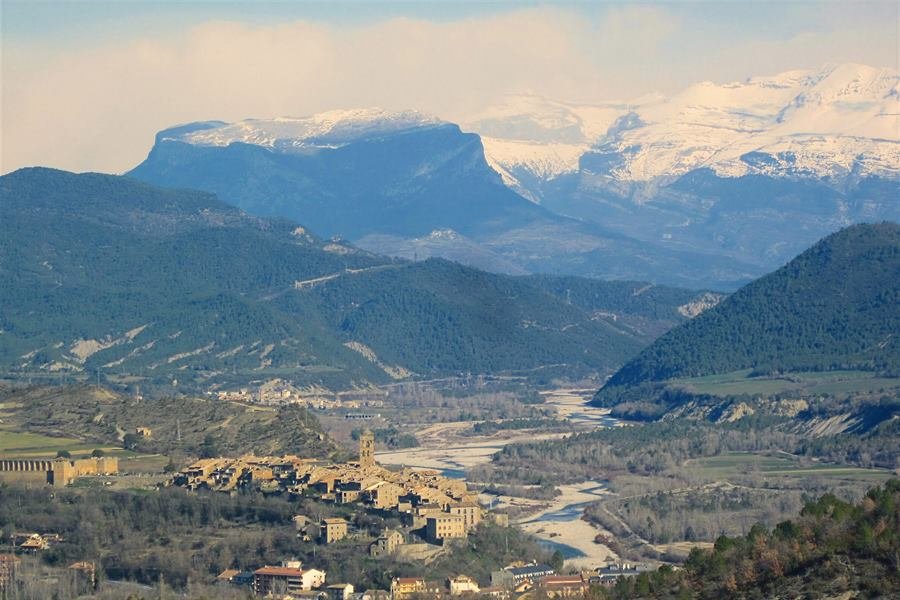
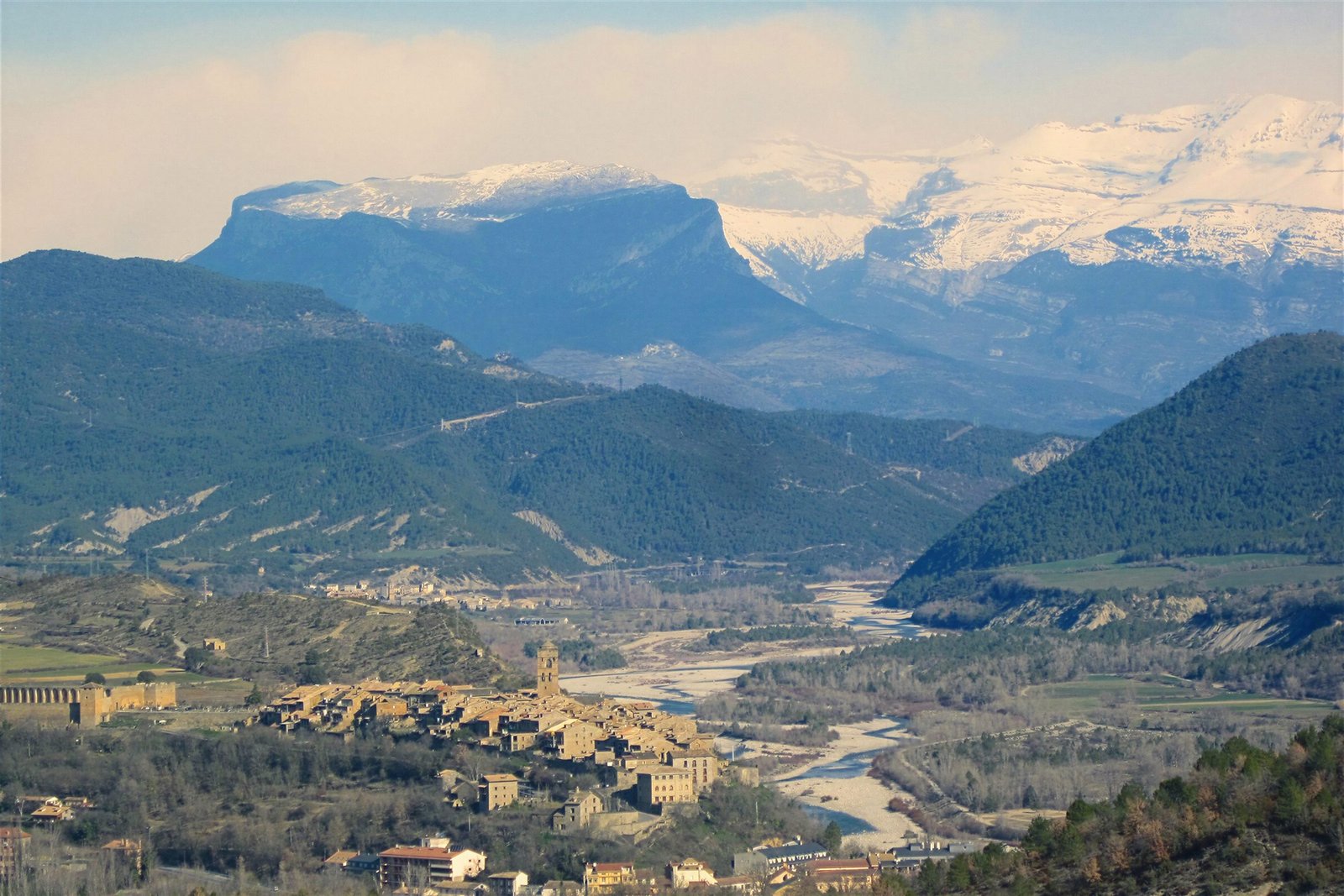
At the confluence of the Cinca and Ara rivers, surrounded by mountains and Pyrenean landscapes, Aínsa invites you to travel without hurry and to discover a land full of history, nature and traditions.
The town is an excellent base for mountain sports and for exploring natural areas as outstanding as Ordesa and Monte Perdido National Park, Posets-Maladeta Natural Park and the Sierra and Canyons of Guara Natural Park.
This medieval town keeps its historical legacy alive through its cobbled streets, its stone houses and landmarks as iconic as the Plaza Mayor, the castle and the church of Santa María, crowned by its emblematic tower. Its old town is declared a Historic-Artistic Site, and Aínsa is a member of the association Los Pueblos Más Bonitos de España (The Most Beautiful Villages of Spain).
A walk through history
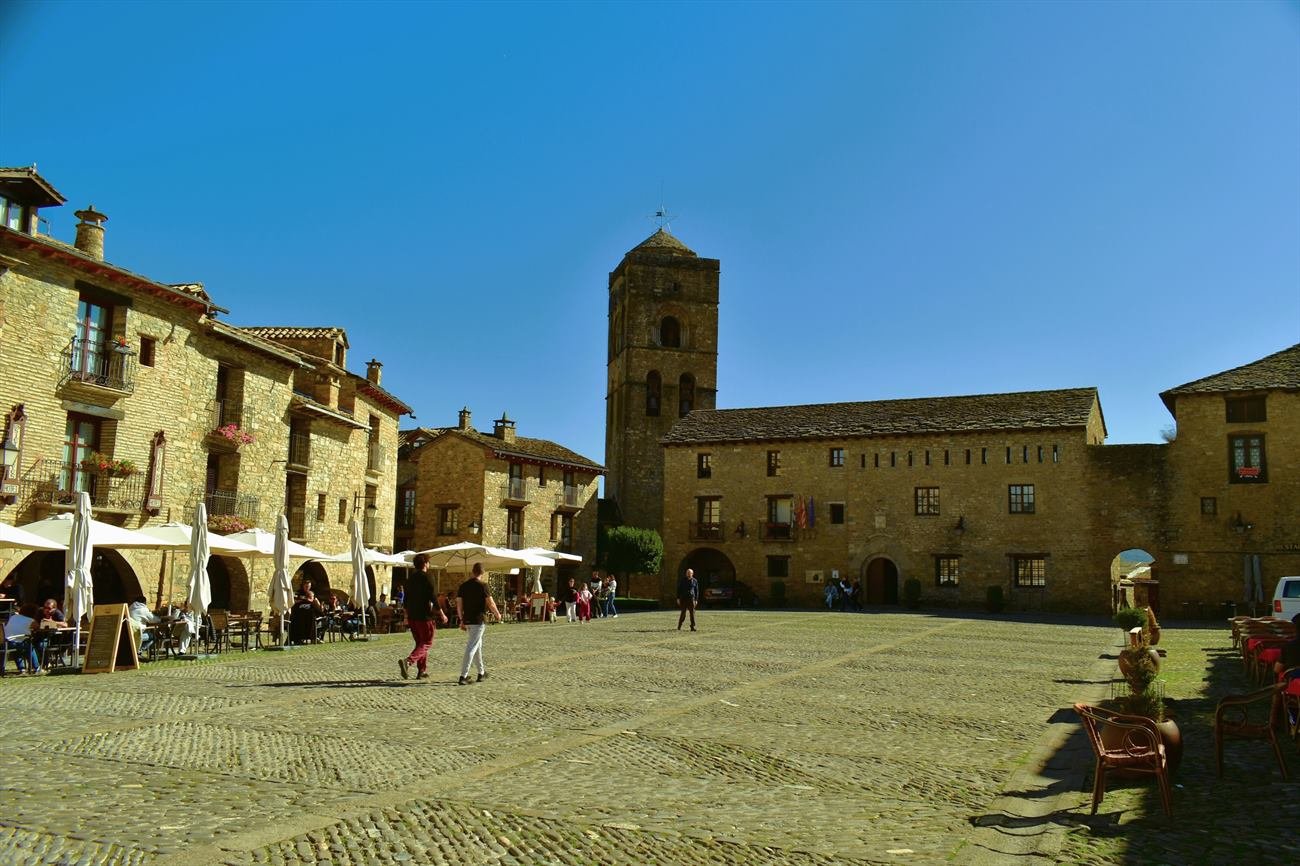
The Plaza Mayor, with its characteristic medieval arcades, is the heart of Aínsa. From there you can walk up to the castle and explore what remains of the old walls, or visit the church of Santa María, whose tower dominates the historic ensemble.
Aínsa keeps its traditions alive through celebrations such as La Morisma, a historical re-enactment that recalls, every two years, the legendary battle between Christians and Muslims, linked to the origin of the town.
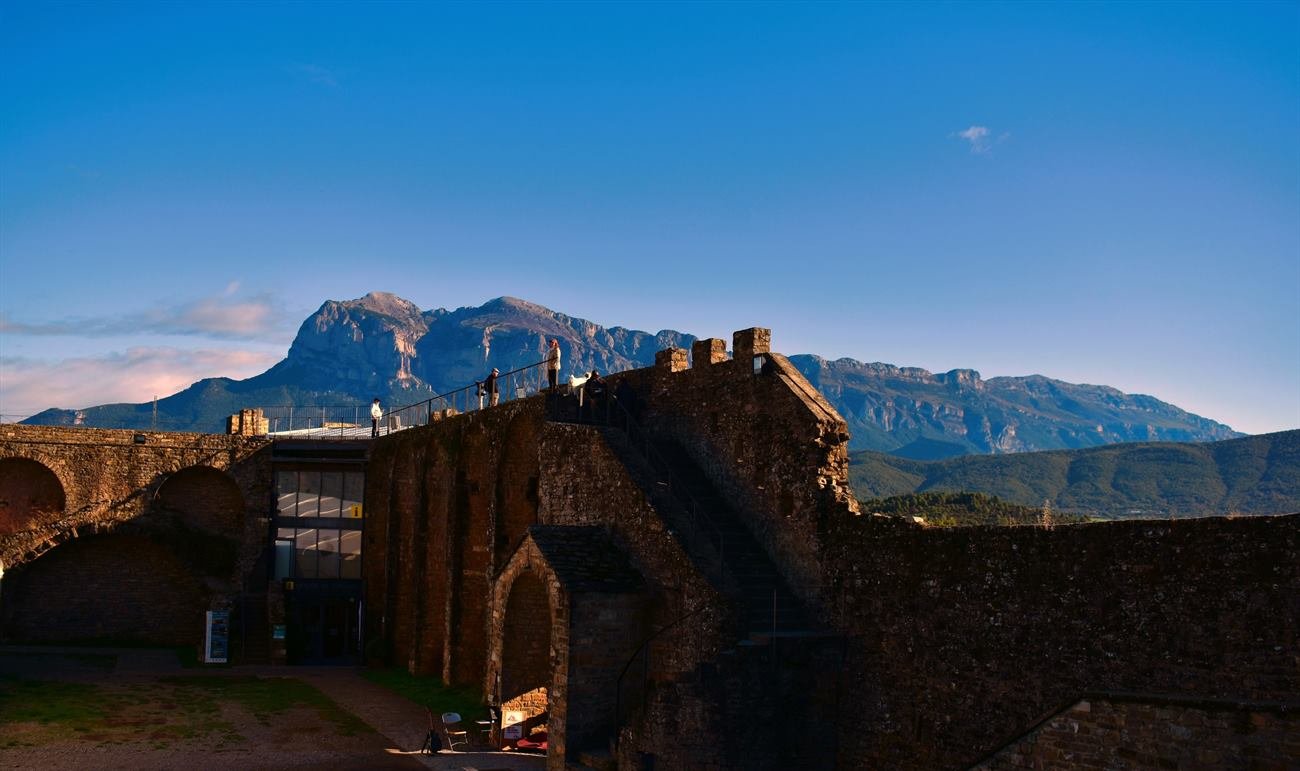
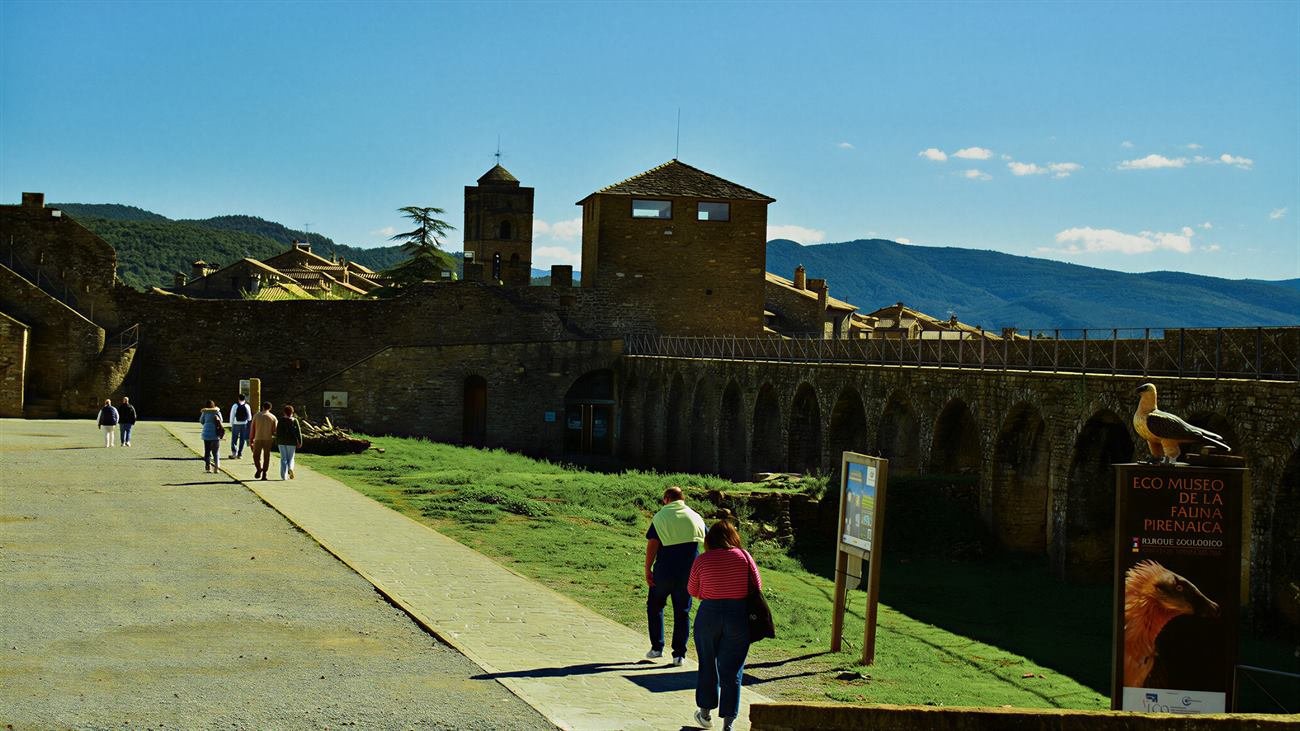
The castle is one of the great hallmarks of the town. Its construction and evolution spanned the 11th to the 17th centuries. Walking along its walls lets you take in the landscape that surrounds Aínsa and enjoy a privileged panorama of the Plaza Mayor. Within the castle grounds you will find one of Aínsa’s two tourist information offices, the Eco Museo Centro de Visitantes and the Espacio del Geoparque Sobrarbe-Pirineos.
The old town is a must-see. Strolling through its streets means stepping into the essence of the town and letting yourself be carried along between stone façades, old gateways and small squares that keep all their medieval character.
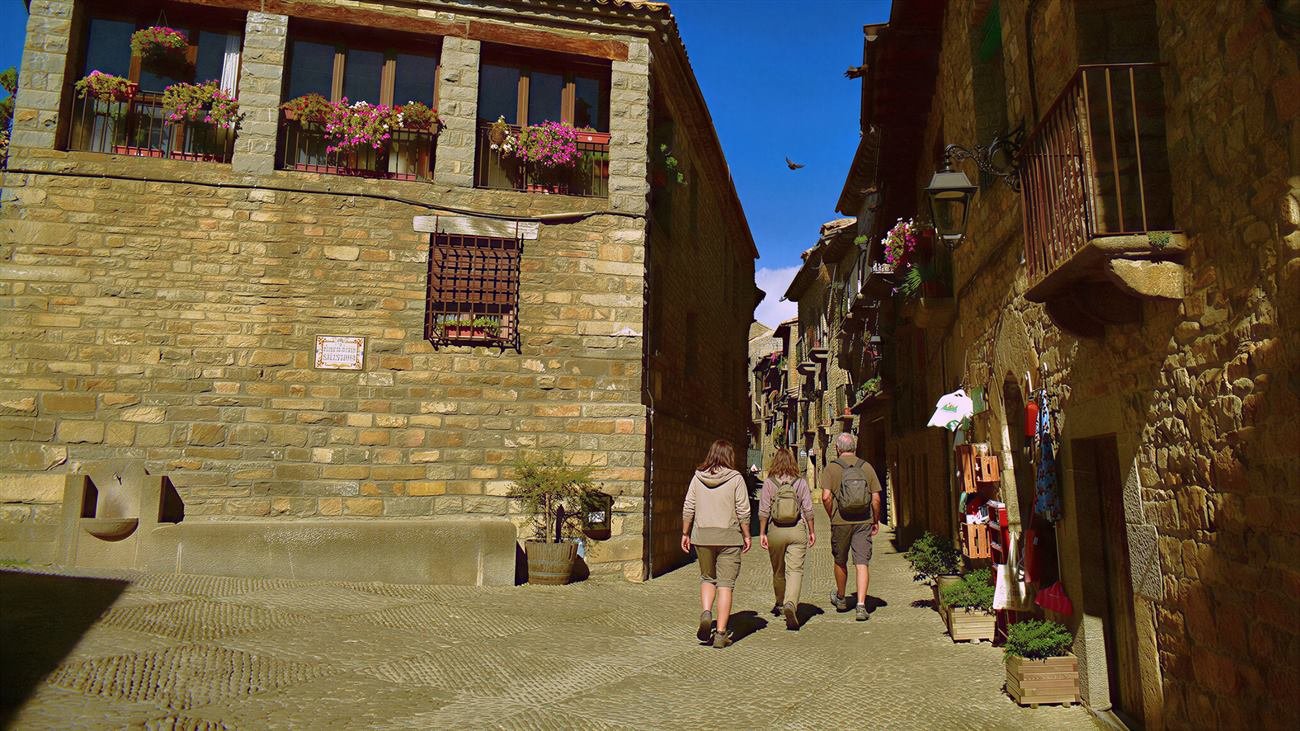
Climbing up to the old town by the stairs
A different way of getting to know Aínsa is to climb up to its old town by the stairs that start from the road junction, in the lower part of the town. This walk lets you leave the shopping area behind and gradually approach the medieval charm of the town.
The climb takes approximately 10-15 minutes, depending on your pace, and is a good alternative for reaching the historic centre without using the car. Once at the top, you can stroll along its cobbled streets, be surprised by the Plaza Mayor and enjoy its corners full of history.
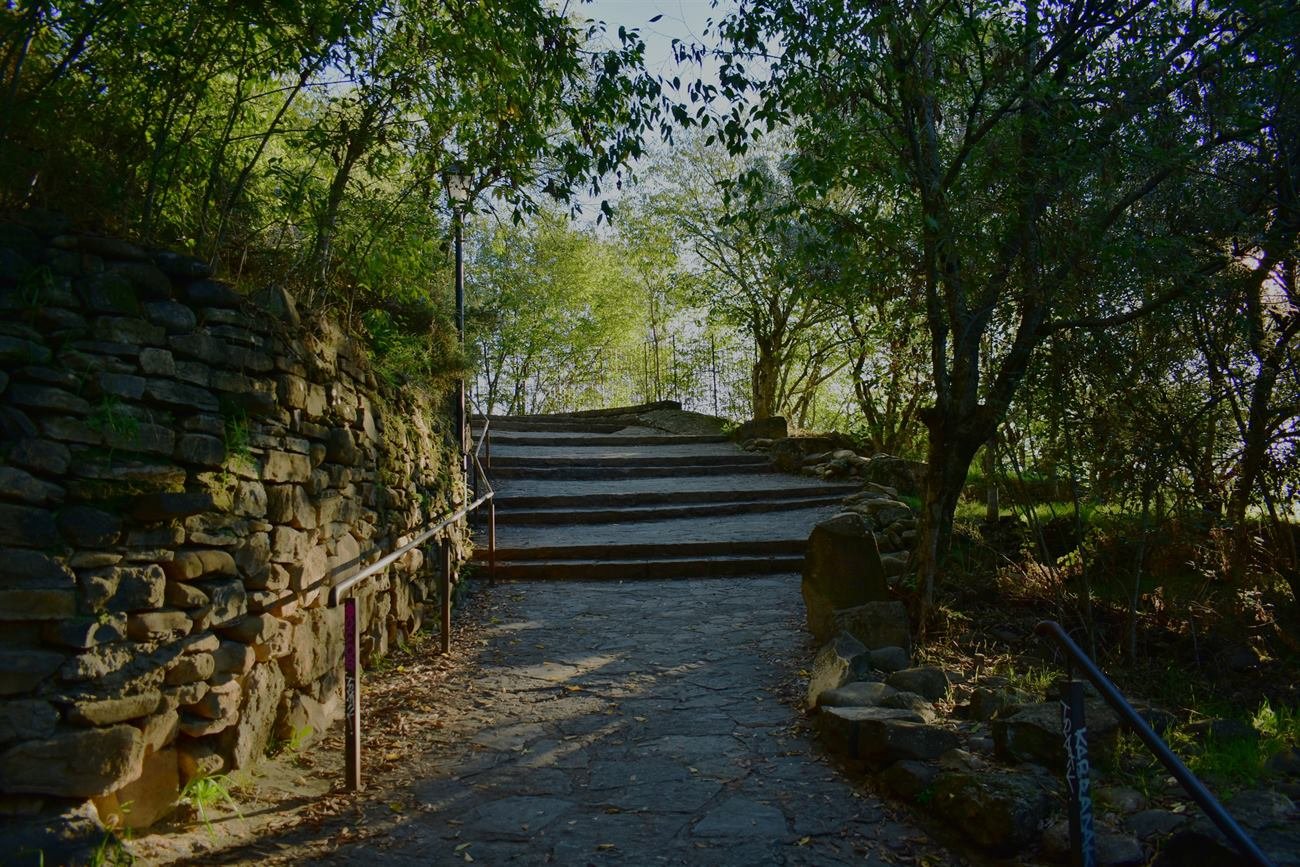
Climbing up to the old town by the Casa Santiago path
A path that starts at the entrance to Aínsa from Labuerda, just before the petrol station, and climbs up to the old town. An alternative for approaching the historic area on foot and enjoying the walk. The climb takes approximately 10 to 15 minutes.
Discover more
An old town with centuries of history
Although Roman pottery remains have been found on nearby hills, the historic core of Aínsa developed during the Middle Ages. Over the centuries, the town grew around its castle and the walled enclosures that protected its inhabitants.
In its origins, the castle was smaller than today’s and stood apart from the village. The first walled area included the streets of the medieval core and the former church of San Salvador, now vanished, next to the church of Santa María. Between the 14th and 15th centuries, the ensemble was extended, the castle became part of the town and new houses and the Plaza Mayor appeared, giving rise to a second defensive enclosure.
Part of those walls is now built into the houses, while in other places stretches of stone and old gateways can still be seen. Of the seven gates the town once had, five survive: the Portal de Abajo, the Portal de Afuera, the Portal Alto, the Portal de Tierra Glera and the Portal del Callizo.
If you want to get to know its past better, you can also take a guided tour.
The Plaza Mayor
The Plaza Mayor is one of Aínsa’s most emblematic spaces and the heart of its historic centre. Its origins date back to the 12th and 13th centuries, a time of great splendour for the town. It stands out for its large size, the traditional stone houses and the characteristic arcades that run along its sides.
Its round and pointed arches, all different, give personality to a square that invites you to stop, notice the details and enjoy the medieval atmosphere. It is also home to the Town Hall building and the access to the Portal Alto, which leads to Calle Mayor.
Streets, façades and traces of the past
Walking through the old town unhurriedly lets you discover much more than its monuments. Calle Mayor, the Portal Alto and the corners of the former Jewish quarter keep the character of traditional architecture, with stone façades and details that evoke other eras.
Around the former Jewish quarter, next to the Portal de Abajo, there is a space known as the Jewish mikveh. Its architectural features have been linked to a possible Jewish ritual bath, a sign of the historical interest of this corner of Aínsa.
The church of Santa María
This Romanesque church, consecrated in 1181 and declared a National Monument, is one of the main examples of Romanesque architecture in Alto Aragón. Its architecture stands out for the sobriety of its forms and for its imposing tower, nearly 30 metres high, which for centuries also served a defensive purpose thanks to its strategic position.
Next to the church is the cloister, of irregular plan, which combines Romanesque and Gothic elements. Nearby you can also see the Arco del Hospital (Hospital Arch), linked to the former pilgrims’ hospital and the passage that connected it with the church.
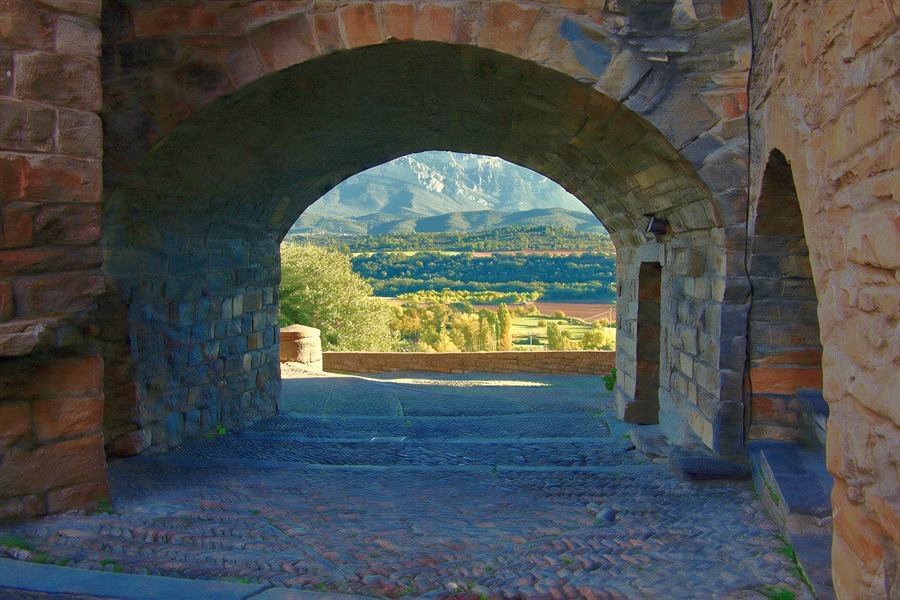
Paths and corners of Aínsa
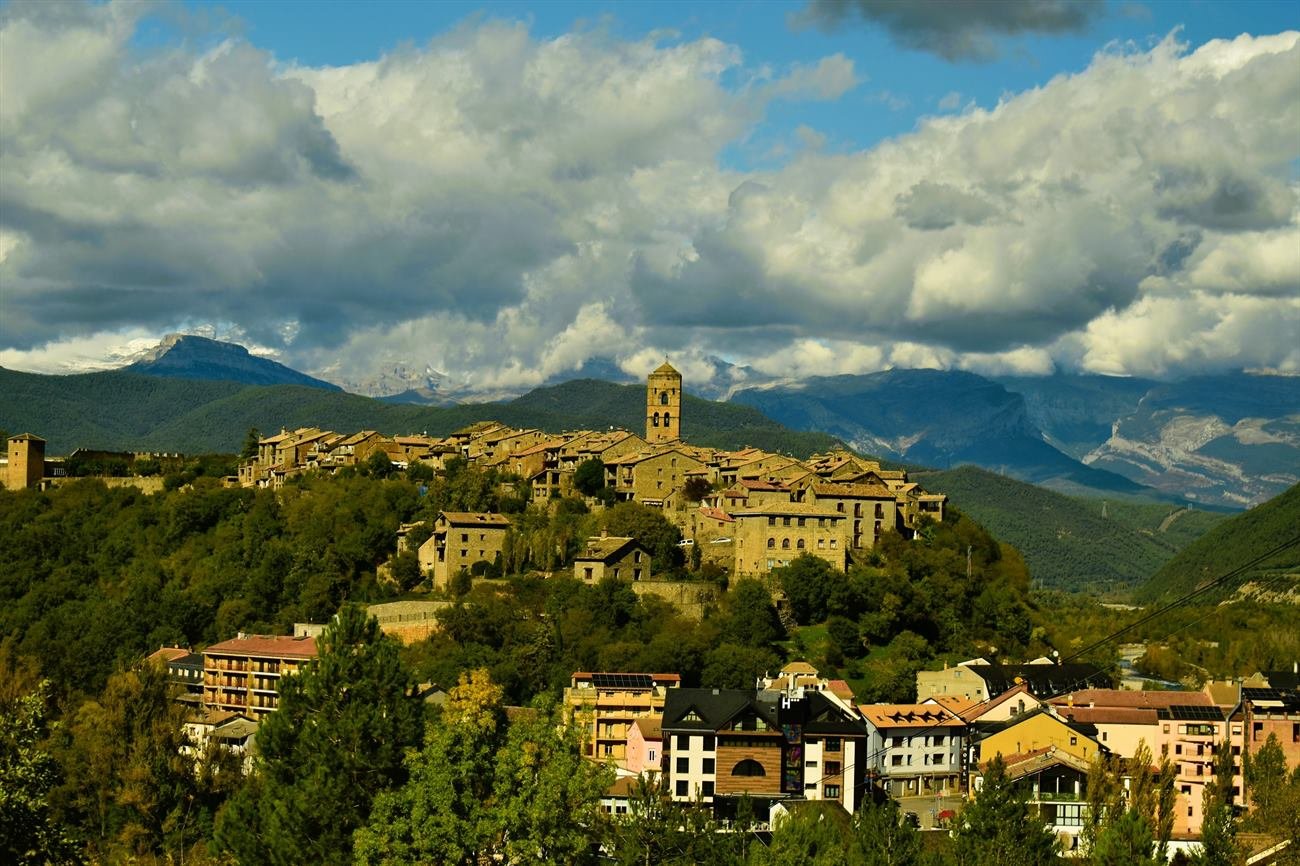
You don’t need to organise a big excursion to enjoy the landscape. Around Aínsa you will find pleasant walks, paths along the rivers and viewpoints from which to admire the Cinca, the Mediano reservoir, the Peña Montañesa and the Pyrenean peaks.
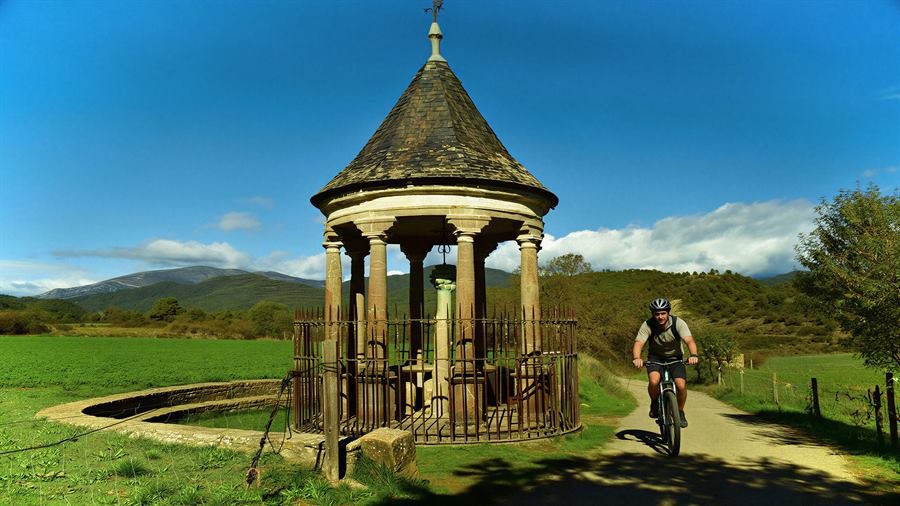
The Cruz Cubierta and the legend of La Morisma
About 1.5 kilometres from the castle stands the Cruz Cubierta, a small circular shrine built in 1655. Inside it is preserved a holm oak topped by a cross, linked to one of Aínsa’s best-known legends.
According to tradition, in the year 724, during the battle to recover the town, a cross of fire appeared over a holm oak. This event is said to have encouraged the Christian defenders and forms part of the legendary story passed down from generation to generation.
This story is relived in La Morisma, a popular historical and theatrical performance that the people of Aínsa celebrate every two years, keeping alive one of the town’s most unique traditions.
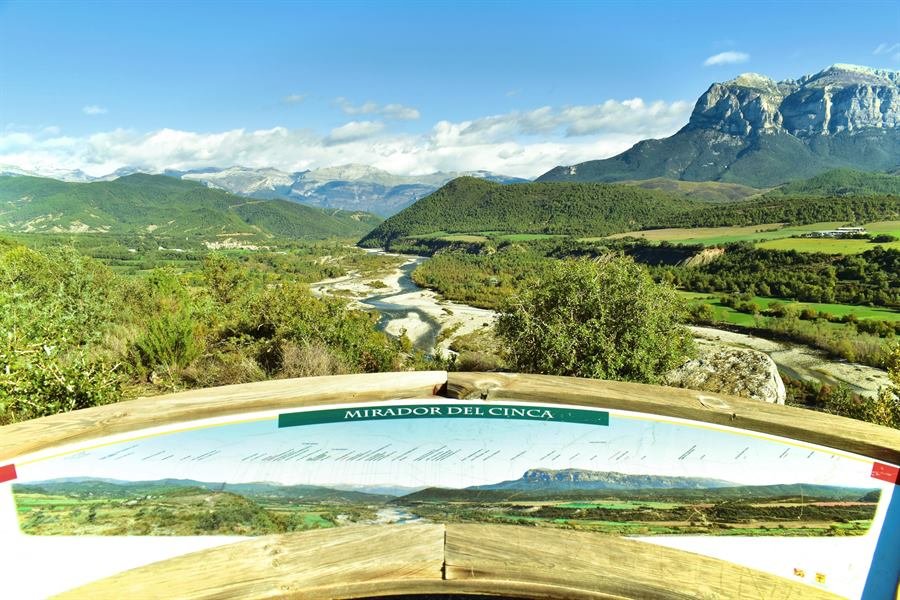
Mirador del Cinca
A natural balcony from which to admire the Cinca valley, the Mediano reservoir, the Peña Montañesa, the Pyrenean mountains and the medieval skyline of Aínsa. The circular route starts at the old town car park and is about 1.5 km long.
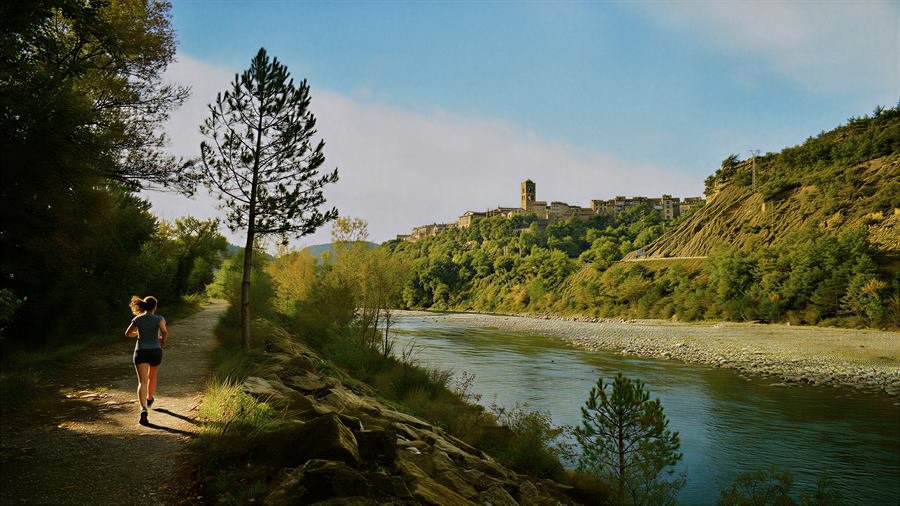
Walk along the riverside paths of the Cinca and Ara rivers
A pleasant option for walking or mountain biking beside the rivers. Ideal for enjoying the natural surroundings and seeing the landscape from a different perspective.
The Cinca path runs through the extensive Nabateros Park and links up with the path to the hermitage of Santa Ana. The Ara path runs through the vegetable-garden area and lets you reach the neighbouring town of Boltaña.
Discover more
From Aínsa to Banastón-Usana
A walk to Usana, a hamlet known for its characteristic covered passage. The route starts at the end of the Banastón neighbourhood, in Aínsa, and lets you discover a charming rural corner in about 20 minutes’ walk.
Trails of the Sierra de Partara
From the roundabout at the entrance to Aínsa on the Barbastro road, several trails set off through the Sierra de Partara. There are options of different lengths and difficulty, so you can choose the route that suits you best.
Get to know its museums and interpretation centres
The Sobrarbe is a land of villages with personality, traditional architecture and customs passed down from generation to generation. Its museums and interpretation centres bring you closer to the Pyrenean fauna, the geological history of this territory and the trades that were part of everyday life.
Discover more
Eco Museo Centro de Visitantes
An opportunity to get to know the fauna and nature of the Pyrenees better. Through informative and educational content, this space brings visitors closer to the richness of the natural environment and the importance of protecting it, with special attention to emblematic species such as the bearded vulture.
Espacio del Geoparque Sobrarbe-Pirineos
The Sobrarbe-Pirineos Geopark offers a journey through more than 500 million years of Earth’s history. Its landscapes and rock formations show how these mountains have been transformed over time, from ancient seas to the shaping by glaciers. A visit to understand the extraordinary geological richness of the territory.
Museo de Oficios y Artes Tradicionales
Located in the historic Casa Latorre, in the heart of Aínsa’s old town, this museum offers a glimpse into everyday life in other eras and the trades that were part of Pyrenean culture. Its rooms display tools, techniques and traditional crafts related to wood, textiles, pottery, tinsmithing, basketry and blacksmithing.
Centro de Arte Contemporáneo de Aínsa-Sobrarbe
A space dedicated to bringing contemporary art closer to the public through exhibitions, outreach activities and a specialised documentary collection. A different cultural offering that complements a visit to Aínsa’s historic heritage and lets you discover other forms of artistic expression.
Aínsa: services and convenience
Aínsa also has a modern commercial area, developed mainly in the lower part of the town, around the road junction, and in the districts of Partara and Banastón.
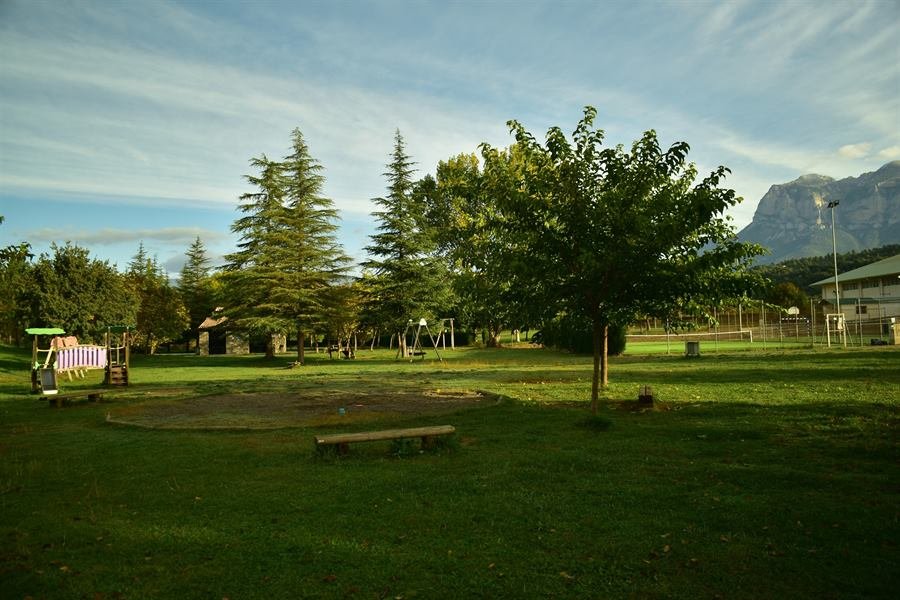
Here you will find everything you need to enjoy your stay comfortably: supermarkets, shops, cafés, restaurants, a pharmacy, a health centre, a petrol station and a taxi service. It also has 2 tourist information offices, located at the road junction and at the castle, municipal swimming pools, a library, a pump track and a large park with green areas, a picnic area and a sports area.
Unforgettable views near Aínsa
In the Sobrarbe there are countless places where history and nature go hand in hand, with spectacular views. Some near Aínsa are the Esconjuradero de Guaso, Samitier Castle, the architectural complex of Muro de Roda and the circular route of the 3 hermitages of Tella.
Discover more
- Esconjuradero de Guaso, listed as a Site of Cultural Interest (BIC) within Aragonese heritage, with panoramic views of the Sobrarbe region and the Aragonese Pyrenees.
- Hike to Samitier Castle, with dizzying views over the Entremón and the Sobrarbe region (2 km of uphill track).
- Muro de Roda: a medieval religious-military architectural complex, now uninhabited, set on a hilltop at 1,036 metres above sea level in the municipality of La Fueva, in the Sobrarbe region (Huesca, Aragón).
- Circular route of the 3 hermitages of Tella, with spectacular views (about 1 hour long).
Want to plan your visits?

And, at the end of the day, El Descanso is waiting for you in Aínsa to recharge and keep enjoying the Pyrenees
Contact and booking